
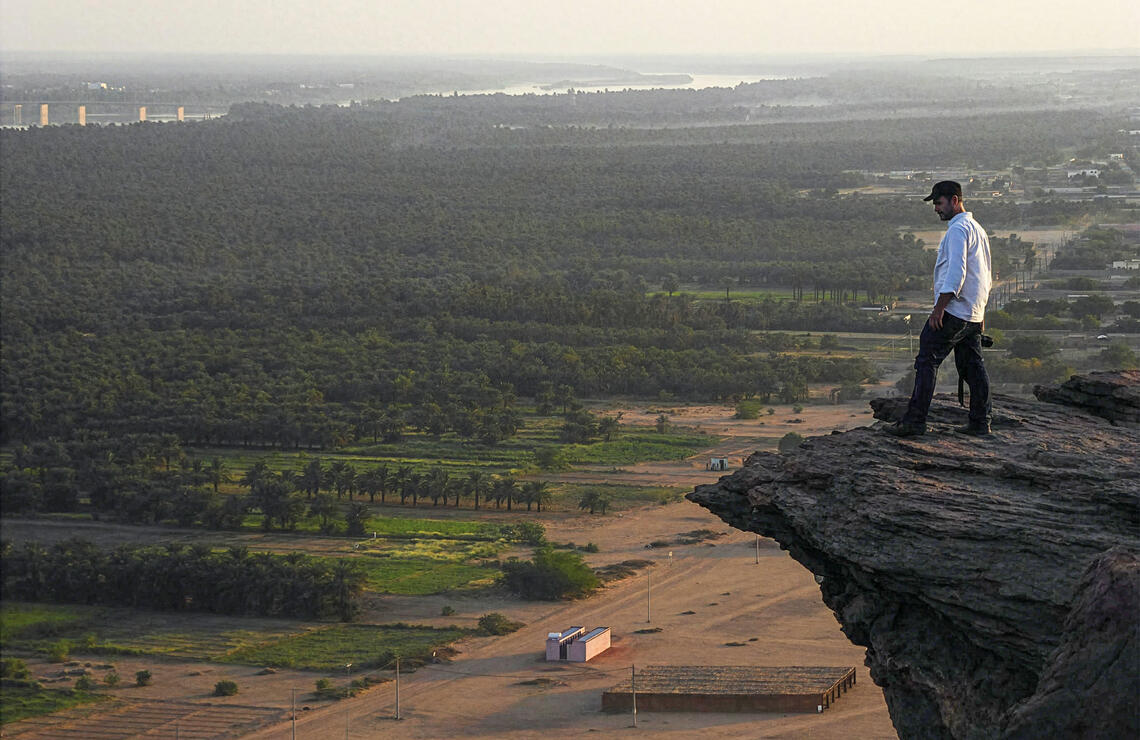
Xavier Aldekoa: « All African rivers
have a magnetic power »
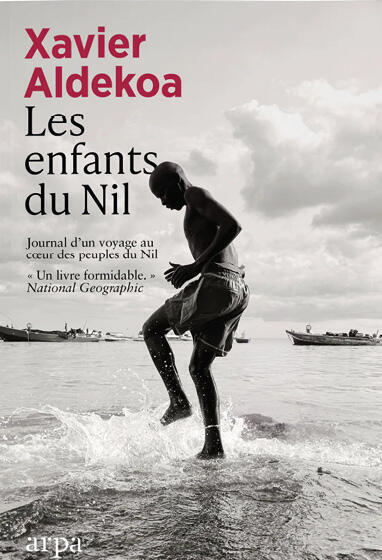
The veteran reporter, who has specialised in Africa for more than 20 years, tells the story of a continent far removed from clichés. On the occasion of the French publication of Children of the Nile, an account of his long journey along the legendary river, he discusses the encounters that shape his perspective, the region’s geopolitical upheavals and the power of storytelling to convey the complexity of reality.
What strikes you when reading his accounts — a mix of notes taken in the moment, stories gathered through chance encounters and analysis — is the sensitivity with which he looks at the world. There is no mystery behind it: Xavier Aldekoa gets as close as possible to people and places, even — and especially — in the most difficult circumstances. A Catalan foreign correspondent who has specialised in Africa for more than 20 years, he is constantly travelling across the continent, covering conflicts, epidemics, famines and popular uprisings, as well as everyday stories, traditions and the birth of new states. In 2023, he received the Ortega y Gasset Award for a series of multimedia reports on Congo, further cementing recognition of his work as a field journalist. He has collaborated with La Vanguardia, National Geographic, Al Jazeera and Catalunya Ràdio, among others, and is a co-founder of 5W magazine. Of his various books, Children of the Nile is the first to be translated into French. It recounts a journey lasting several months along the legendary river, from its sources to the Mediterranean. It is also a sweeping narrative that brings to the surface the social, cultural and political complexity of the countries through which it passes.
AM: Why did you choose the Nile as the thread running through this book?
Xavier Aldekoa: In my preface, I write: “The Nile is not a river. The Nile is much more than that.” In reality, I believe that all African rivers have a magnetic power. But at 6,650 kilometres, making it the second-longest river in the world after the Amazon, the Nile is unique. A link between the continent and the Mediterranean world, and probably a route taken by Homo sapiens on their way to Eurasia, it has played a central role for thousands of years in Africa’s environmental, economic and cultural history. It is the cradle of the intermingling of the great African and Mediterranean cultures, both past and present. Thanks to the Nile, life flourished in parts of East Africa, and some of the most prestigious civilisations in history developed along its banks, beginning with the oldest and most enduring of them all: pharaonic Egypt. Since antiquity, the river’s course has therefore aroused curiosity and offered a way of exploring its mysteries and discovering the cultures nourished by its waters. Rulers, archaeologists, treasure hunters, adventurers and writers have all become fascinated by it, sometimes to the point of madness… In the fifth century BC, Herodotus, the explorer and great observer of civilisations, travelled up the river from its mouth to what is now Aswan. He devoted Book II of his Histories to it, one of the most fascinating and detailed travel accounts in history. After him, Thales of Miletus, Plato, Aristotle and Alexander the Great were also fascinated by its magic. And we must not forget Napoleon, who, when he set out to conquer Egypt in 1798, brought 167 scholars with him, tasked with documenting the culture and life along the great river’s banks. From a scientific and cultural perspective, the expedition marked a turning point in the Western study of Egypt. In a sense, the Nile was for a long time a kind of centre of the world. So, following in the footsteps of all those who wanted to discover and understand the past and present history of the Nile, I eventually decided to travel upstream myself. It was a project I had dreamed of since childhood.
The Nile flows through many countries, cultures and political realities. How did you shape your journey through five of the 11 countries the river crosses or borders?
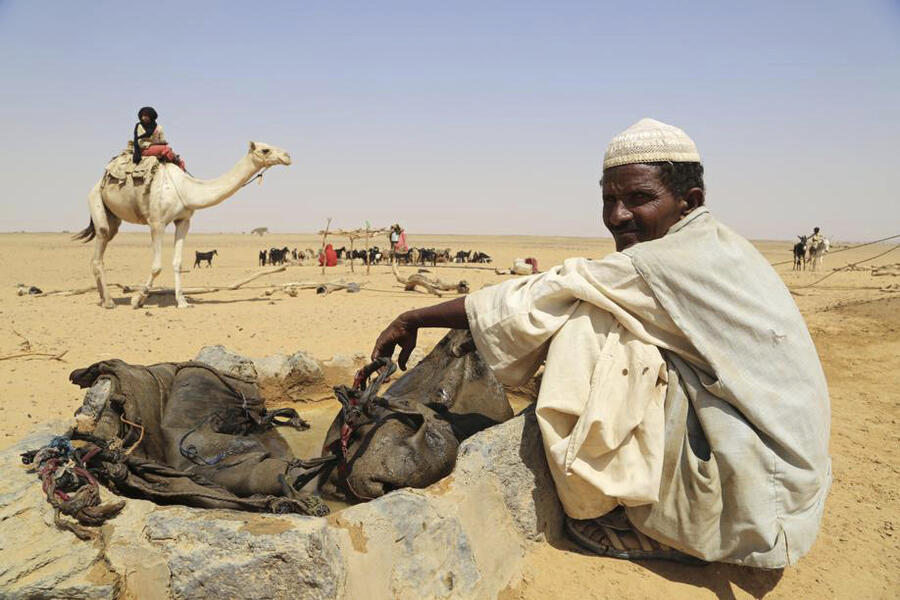
The Nile is formed by the meeting of two rivers: the White Nile, which rises in Lake Victoria, at the point where Uganda, Tanzania and Kenya meet, and the Blue Nile, which originates in the waters of Lake Tana in Ethiopia. I travelled through all the countries through which the Nile “really” flows: Uganda and Ethiopia, South Sudan and Sudan, and Egypt. The river perhaps became an excuse to revisit these countries, which I had already travelled through and which had left a strong impression on me in many ways. They allowed me to understand the diversity and richness of Africa. My book draws on more than a dozen journeys to the region, some dating back to 2011 — the year South Sudan gained independence. For the book, I followed the Nile and returned to each of these territories for several months. That was around 10 years ago. At the time, the region included a country at war, South Sudan; another at peace, Uganda; a revolution fuelled by spectacular economic growth in Ethiopia; a dictatorship in Sudan; and problems linked to jihadism in Egypt. Even today, all of Africa’s conflicts are reflected in the Nile. It is like a microcosm of the continent’s grandeur and misery.
Are there other rivers that attract you?
From the outset, I began imagining a trilogy about rivers. I wanted to follow the Nile, then the Congo and finally the Niger. Unfortunately, the latter remains a dream because of the situation in the Sahel. It would be extremely complicated and, above all, too dangerous. My idea of travel does not involve flirting with the risk of losing my life. Children of the Nile is an immersion in the lives of the peoples of the river: refugee children, uprooted mothers, fishermen, nomads, political prisoners and silent revolutionaries. It is the people I meet who shape my journeys. And they allow me to get closer to the realities, culture, economy and geopolitics of the countries I travel through. After the Nile, my journey along the Congo, one of the continent’s least-known rivers, followed the same approach. So did the book that emerged from it, Quijote en el Congo, published in 2023 [not translated, editor’s note].
What have you discovered that the people living along the Nile have in common?
Of the more than 330 million people living in the Nile basin states, 160 million live within the Nile watershed, which covers 3 million square kilometres — one-tenth of the African continent. The river is central to agriculture, the economy and trade. It is a powerful driver of development for a large part of Africa. Everyone living along it understands that their survival depends on the river and sees it as a source of wealth. Everyone considers it a treasure. That really struck me. I don’t have the impression that rivers, streams or water are valued in quite the same way in Europe.
What role does the Nile play in the face of environmental and political challenges?
The Nile has always played a major role, but it will become even more important in the future. The region is vulnerable to drought and beset by armed conflicts. Rapid population growth is increasing demand for agricultural products and hydropower in an already fragile area. Meanwhile, the filling of the Grand Ethiopian Renaissance Dam (GERD), Africa’s largest dam, and its inauguration in 2025 have reignited geopolitical tensions. The dam is located on the Blue Nile, which flows into Sudan, where it meets the White Nile to form the Nile. Outside Ethiopia, the mega-dam has faced fierce criticism, particularly from Sudan and Egypt, which describe it as an existential threat. Without a lasting agreement on how the river’s waters should be shared, the crisis could erupt. Located more than 2,500 kilometres downstream from the dam, Egypt is already bearing the brunt of climate change. It fears that the project could reduce the amount of Nile water available to the country and trap the sediment carried by the Blue Nile — nutrient-rich silt that helps fertilise and replenish the soil. Its roughly 110 million inhabitants depend on the Nile for 97% of their water needs, particularly for agriculture. This relationship with water, and these rivalries, could become increasingly complicated.
Did you title your book Children of the Nile as a reference to Africa’s young population?
Africa has the youngest population in the world, with more than 400 million people between the ages of 15 and 35. The title refers to that. It also refers to the many young people I met along my journey. I have spent 25 years travelling constantly across the continent, and I can see the difference between Europe, where at 45 I feel far from old age, and Africa, where I belong to the older generation. Young people are everywhere, and they want to do things, create, move forward. They have an incredible energy. A continent that young represents a multitude of opportunities. And the possibility of moving towards change. Of coming up for air. If we are capable of giving them a chance, they will seize it with both hands.
How do human encounters influence your understanding of the continent’s major political and social challenges?
The Nile is a distillation of all of Africa’s grandeur and misery. I always make a point of presenting the continent in a balanced way, without focusing exclusively on trauma. I tell difficult, violent stories, such as that of women in South Sudan who were raped for hours by soldiers while UN peacekeepers, supposedly there to protect them, looked on indifferently. But I make a point of balancing tragic scenes with positive moments — everyday anecdotes, traditions, stories of resourcefulness. That is the part of my work I love most: telling people’s stories. Listening to them. There is enormous generosity in Africa. People open their doors to me, help me understand the facts, explain things to me and confide in me. That is what I value most in my work. Always. Because this is what allows us to see a society. These are the keys that enable readers to grasp the reality of a country. If we always look towards the wound, we distance ourselves from the other. But if we look towards life and what connects us, we can recognise ourselves in others: a grandmother who has heard nothing from her grandson, a love story, a friendship, the excitement of developing a project… Ultimately, we are not so different. It is through these simple things in life that you can tell the story of a country.
| 
|
| 
|
Is there still a story that has particularly stayed with you and continues to accompany you today?
Many encounters remain etched in my memory. But if I had to choose one, I would talk about Grace, who was 16 when I met her in a displacement camp in Mingkaman, near the Nile, in South Sudan. She never stopped asking questions. I had rarely met a teenager so bright and perceptive. When I asked her what the camp, which lacked almost everything, needed most, she answered immediately: “A school. Without a school, I can’t have a future.” Some time later, when one of my articles about Grace was published in La Vanguardia, I received a call from a doctor who wanted to pay for her education. I tried to contact Grace, but as soon as I had told her the news, the connection was cut off, and I was unable to speak to her for several weeks. Until one day, she sent me a message to say that she was ready. She had made her way to Kenya, crossing a country at war on foot, by boat and by bus. It had taken two months. But she was now able to study. And she did, thanks to her determination and the philanthropy of a man who has remained anonymous to this day. Since then, she has returned to South Sudan, worked as a journalist, founded an NGO to help people in situations like hers, and became a mother four months ago. Even though life has been and continues to be difficult, she has never given up.
It has been ten years since Children of the Nile was published. Would you make the journey again today?
Without hesitation. Because I believe that the situation in the region and the lives of its people deserve even more attention. Ethiopian Prime Minister Abiy Ahmed, who won the Nobel Peace Prize in 2019 and went on to become a wartime leader… Yoweri Museveni, who has been at the helm of Uganda since 1986 and, at the age of 81, won a seventh presidential term this year with 71.65% of the vote against Bobi Wine, the “ghetto president,” a former singer who moved from raggamuffin music into politics… Whether it is politics, the environment or people themselves, everything is changing. In Uganda, where I have since returned, I covered a fascinating social phenomenon: video jockeys, or VJs, who translate foreign films live, a little like human subtitles, in disadvantaged neighbourhoods for audiences who speak only their native languages. The VJs add jokes to the film, play the role of an actor and keep the atmosphere lively. Some viewers are actually more captivated by the VJ’s performance than by the film itself, because they are watching a man put on a show for 90 minutes, or even three hours — moving, commenting and exclaiming. In these neighbourhoods, they are stars, and people even ask them for autographs. The continent is full of phenomena like this, which together make up its identity.
The poet and traveller Victor Segalen wrote: “A journey should not be charted by chance. Every human experience needs a solid terrestrial springboard.” Does that resonate with you?
Before setting off on a journey, I read a great deal and try to leave with a subject to explore, a thread to follow that can reveal the larger story through the details, placing it within a broader context. In that sense, a kind of imaginary world can be a prelude to a very real adventure. But it is true that once I am in the field, I am quite inclined to change my plans. Travel is a privileged way of encountering otherness. What ultimately matters is exchange and listening. Sometimes someone tells me an anecdote, a fact that does not necessarily have anything to do with what I am looking for, and I say to myself: “Ah, I think there’s a story here.” Or sometimes, lived experience takes over. Like what I recount about Ugandan minibuses, with their waiting, tricks and little arrangements. At bus stations, buses do not leave according to a timetable, but according to the passengers — when the last available seat has been filled. This departure system is common in many African countries. But you have to stay alert, because there are seat warmers. These accomplices of the drivers pretend that the bus is ready to leave so that the last seats can be sold, even though the departure may still be hours away. So you always have to keep your eyes open. In short, it is an anecdote that shows how resourcefulness is part of everyday life, part of a state of mind.
Your description of the keys to the Sudd reveals an interesting cultural dimension…
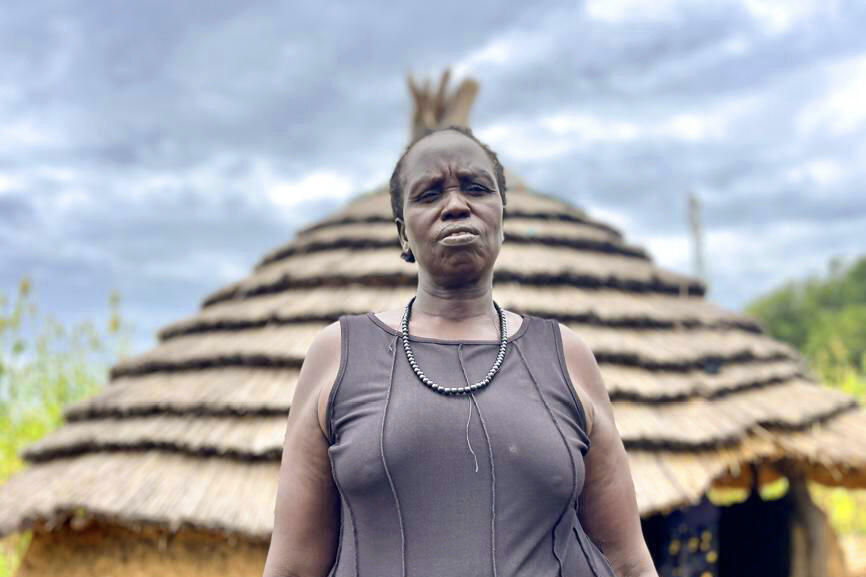
The Sudd swamp — “barrier” or “obstruction” in Arabic — stretches across a vast region of northern South Sudan and changes shape every year. When war breaks out, the islands within it become places of refuge. I met grandmothers on the island of Madit who told me about their homes being burned and their village completely destroyed. What struck me was that they all wore the key to their home around their necks, attached to a necklace. It reminded me of the Muslims expelled from Spain, whose descendants can be found in Timbuktu — my first journey on the continent — and in Mauritania. For all those who have kept the key, it represents access to their ancestors, to the history of their lineage. It connects the person carrying it to the place they come from. It is the key to oneself. Like a place that will always exist, even if the house itself is no longer there.
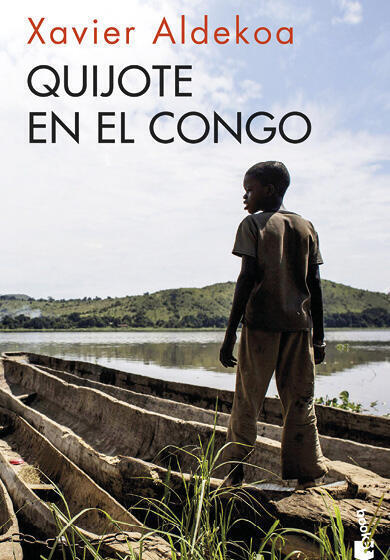
After Children of the Nile, you also wrote Quijote en el Congo [Don Quixote in the Congo, not translated into English, ed.]. How did Cervantes’s work accompany you on that journey?
“For more than two months of travelling by boat, I was Sancho Panza… travelling along a Quixotic river.” That is what I explain in this book, which grew out of my journey along the Congo River. I set off with this masterpiece so that I could reread it during the journey. I was on a huge boat with 300 or 400 people, surrounded by goods and cargo. In twenty years, I had never pushed myself to such limits on every level — physical, mental… Logistically, it was also a challenge, a mountain to climb; it took me years to make it happen. I wanted to introduce readers to a region that is diverse and fascinating. On the boat, I read. And I sensed a strange atmosphere: people were looking at me with fear or displeasure. I asked the Congolese friend who was travelling with me what was going on. He went to speak to the passengers, who explained that because they saw me reading a large book, they thought I was a sorcerer. So I took the time — something essential in my profession — to explain what I was doing, what the book I was holding was about, and that I was a writer. I had to rebuild their trust so that they would not think I might be responsible for misfortune on board — a sick passenger, a storm… The most extraordinary thing about all this is that Don Quixote, as delirious as it may be, not only brought me closer to people, but also gave me a key. A kind of translation of reality, of the context.
What does the madness of Don Quixote tell us?
To keep moving forward! He is the only protagonist in the book who continues to pursue his dreams, moving ahead against all odds. In the same way, the Congo River continues on its course towards the sea, despite the jungle, wars, rebels… Both of them, extraordinary and mad in equal measure, never give up. They are tremendously alive.
| 
|