
Paulin Melatagia Yonta:
“It Is Crucial to Develop Frugal AI”
Computer Science Lecturer and Researcher, University of Yaoundé I
Africa’s AI leaders recognise that the continent must develop its own solutions—technologies designed specifically for African realities, languages and development needs.
AM: What are the main uses of AI across Africa?
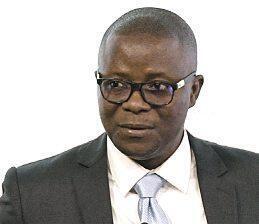
Paulin Melatagia Yonta: Agriculture is the first major field, particularly plant health. AI is used to detect, monitor and predict crop diseases by analysing images of leaves, stems and other plant tissues. Most of these applications are designed for smartphones so they remain accessible to farmers. In human and animal health, the largest number of platforms rely on medical imaging to detect tumours and lesions. With the emergence of large language models (LLMs)—such as ChatGPT, Gemini, DeepSeek and Mistral—we are also seeing rapid growth in AI-assisted diagnosis and the automated generation of medical consultation reports. Finally, in education, the primary application is the creation of teaching content. African startups and research laboratories are receiving increasing demand for solutions that can automatically grade exams and assess learners.
How can AI contribute to Africa’s energy transition?
In many African countries, the first priority is closing the energy gap. That is why decentralised energy solutions are becoming increasingly widespread. In this context, AI makes it possible to optimise electricity use by predicting outages, detecting faults and enabling dynamic electricity pricing. It is particularly valuable because it can manage the complexity of multiple interacting variables.
The continent still lacks data centres. How can this obstacle be overcome?
To address this shortage, the African Union and regional organisations recommend that countries share data centre infrastructure rather than each building separate facilities. The strategic objective is not necessarily to multiply data centres dramatically. That caution is driven both by economic realities and by the need to control the enormous water and electricity consumption these facilities require.
AI is highly energy-intensive, while 600 million Africans still lack access to electricity. How can this challenge be addressed?
Decentralised energy systems—solar panels, generators combined with battery storage, and similar technologies—provide an alternative to traditional power sources for both households and businesses. Engineers and startups are already developing AI solutions within this environment. At the same time, major infrastructure projects are expanding electricity generation across the continent, including the Grand Ethiopian Renaissance Dam (GERD), officially inaugurated last September, in one of Africa’s leading countries for AI development.
The AI sector remains dominated by American and Chinese companies. How can Africa develop its own AI solutions?

Africa understands that it must build its own AI. This is essential not only for sovereignty, but also because the continent needs tools capable of understanding African realities, cultures and languages. It is equally crucial to develop frugal AI—models specifically designed to perform efficiently despite Africa’s limited infrastructure. This quest for autonomy is now central to the continental agenda. It is embedded in national AI strategies, the African Union’s strategy, and the resolutions adopted at major gatherings such as the Global AI Summit on Africa in Kigali and the High-Level Policy Dialogue in Addis Ababa, both held in 2025. Concrete action is already underway: training researchers and engineers, educating the public about AI’s opportunities and risks, accelerating AI startups, funding data collection initiatives, and continuously improving digital infrastructure.
What is the relationship between African AI actors and the world’s major technology companies?
Africa’s AI ecosystem does not work in isolation. It collaborates with global technology leaders in both industry and research while maintaining a clear objective: building the continent’s own technological capacity. African languages are a perfect example. The continent is home to around 2,000 languages—roughly one-third of the world’s linguistic heritage. These languages embody unique knowledge systems, cultural practices and ways of understanding the world that differ from Western or Asian models. Although many African language AI initiatives collaborate with or receive funding from global technology companies, they are creating tools capable of understanding and speaking languages that large corporations often overlook because the commercial market is small, the linguistic diversity is immense, and available datasets remain limited.
Are African AI policies fit for purpose?
These issues are increasingly being addressed. Whether we look at economics, law, ethics, public policy, education or research, national strategies and the African Union’s vision are broadly aligned. They are built around clear priorities: inclusive access to AI, youth employment, responsible and ethical deployment, and stronger collaboration between the public and private sectors.
Can the African Continental Free Trade Area (AfCFTA) help accelerate AI development?
Absolutely. The AfCFTA creates a single continental market in which AI can flourish. By expanding the economic space available to innovators, it increases the visibility of products and services developed by African startups. It also encourages countries to share infrastructure and technological resources, while the harmonisation of legal frameworks will make AI systems more interoperable across the continent.