
Nigeria
The new president!
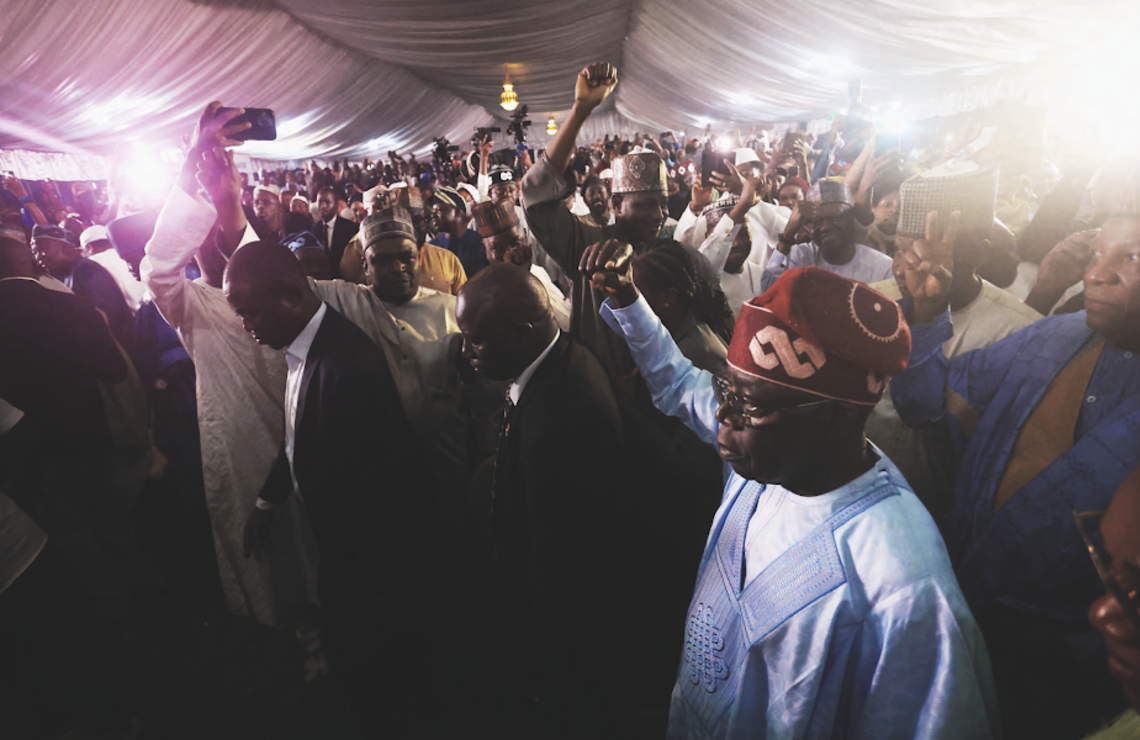
On May 29, Bola Tinubu, winner of the February 25 th election, was sworn in as president of Africa’s most populous country. The 71-year-old former governor of Lagos State, a seasoned "traditional " politician, faces a challenging situation and must prove that he can also be a reformer.
Nigeria’s new president could not have been more aptly named. “Tinubu” means "from the depths" in Yoruba, and he did indeed work his way up from the bottom rung of politics. Since the return of democracy in 1999, he has been a power broker both up front and behind the scenes. The leader of the All Progressives Congress (APC), on February 25 he won 8.8 million of the votes, defeating the People’s Democratic Party (PDP) candidate Atiku Abubakar, who garnered 6.9 million votes, and third-place finisher Peter Obi of the Labour Party with 6.1 million votes. However, low turn-out tempered the first-round victory: just 27% of registered voters bothered to show up at polling stations. Tinubu’s 8.8 million ballots only represent about 10% of Nigeria’s 87 million eligible voters. Turnout has dwindled with every election. “The fact that nothing changes no matter which party is in power and that in eight years the APC didn’t perform any better than the PDP [editor's note: in power between 1999 and 2015] has undoubtedly led people to think there’s no point in voting,” says Laurent Fourchard, research director at the Sciences Po Center for International Studies (CERI). The Nigeria specialist also blames the low turn-out on the cash shortage caused by the central bank’s abrupt decision to change banknotes a few weeks before the vote. “Many low-income people just couldn’t get home to vote because they didn’t have the cash to buy a bus ticket.”
TOWERING CHALLENGES
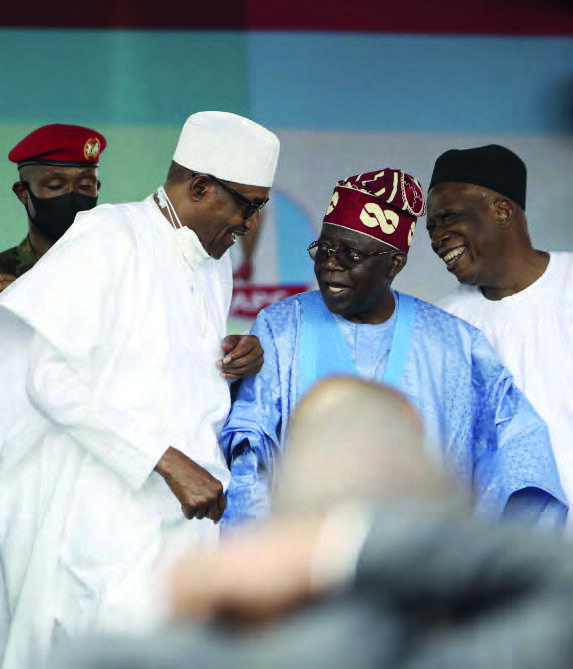
Tinubu faces the daunting challenge of making Nigerians forget the dismal record of his two-term predecessor Muhammadu Buhari (2015-2023), a former military dictator (1983-1985) who jailed the afrobeat star Fela Kuti before converting to democracy and being elected on the unfulfilled promise of restoring order. Faced with Nigerians’ aspirations, difficulties and disenchantment, Tinubu must offer change while ensuring continuity. He is not only the head of Buhari’s party, but also supported his successful presidential bid and converted him to democracy. The 71-year-old will also have to keep a lid on the simmering restlessness of young people in a country where half the population is under 19.
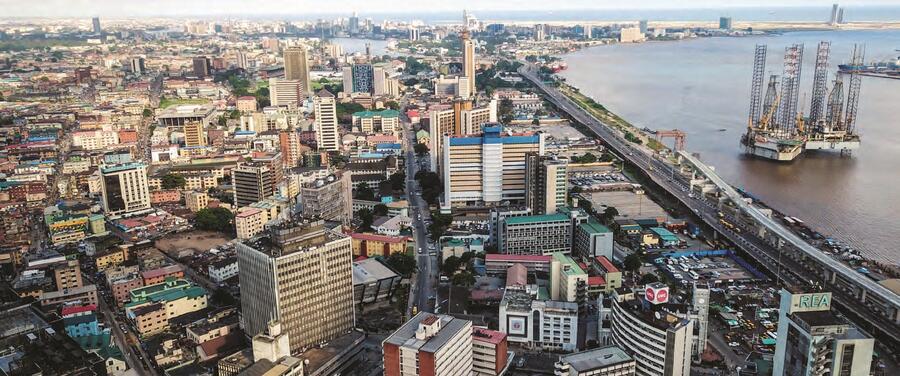
Tinubu achieved his life’s goal. For four years he will lead the continent’s most populous country (210 million people) and largest economy in volume, with a GDP of $440 billion (compared South Africa’s $420 billion). Given the structural challenges plaguing Africa’s giant country, the task seems overwhelming. Two in three Nigerians live in a state of “multidimensional” poverty, inflation stands at 25% a year, corruption is endemic (250,000 barrels of oil are diverted every day) and insecurity has spread to all 36 states of the federation. Boko Haram terrorists carry out attacks in the northeast; bandits run rampant in the rural northwest; Christian farmers and Muslim herders clash in the center; Igbo separatists are fighting for independence in the east; and pirates have made kidnapping an industry in the delta. Given the lack of prospects, young graduates are going into self-imposed exile (japa in Yoruba slang), leaving for greener pastures to offer the ageing global north their skills and labor. In the six weeks from early February to mid-March, 162 Nigerian doctors received permission from British officials to practice in the United Kingdom, Punch wrote in March 2023. “The japa phenomenon no longer involves only medical practitioners, but all skilled professions, from technology to banking,” says Mr. Fourchard. “People are leaving in droves; there is no longer enough staff to keep businesses running.”
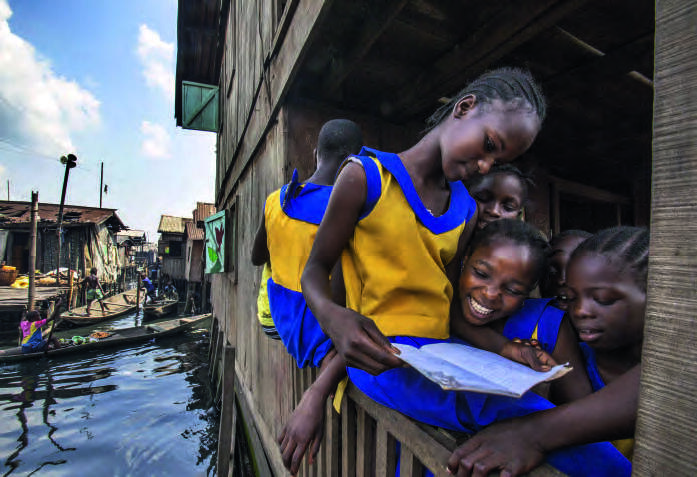
To face the challenge, the new president promises to harness the country’s energy, achieve "10% annual growth" and reach "a GDP of €781 billion by 2027" by improving tax collection, as he did as governor of Lagos in the 2000s. He also guarantees the federated states "more autonomy", especially in the areas of security and taxation, and announced the end of multiple exchange rates as well as fuel subsidies, which, while easing the effects of inflation, led to cross-border smuggling and increased the public deficit. He also pledged to revive agriculture, the poor relation yet most promising part of the "Nigerian model". These measures are not just preaching to the choir. “I know that many of you did not vote for me and feel let down," said a realistic Tinubu in his first speech on March 1 in Abuja. The electoral commission had just declared him the winner, despite his two opponents’ accusations of "massive fraud" and calls for the election results to be cancelled. The new president is well aware that he will have to win over urban youth: in October 2020, after yet another blunder by the Special Anti-Robbery Squad (SARS), young people took to the streets to express their rage. In the weeks that followed, the crackdown on the #EndSARS movement left at least 56 people dead. This new, hyper-connected, rebellious generation made up of many unemployed graduates voted massively for outsider Peter Obi, 61, a PDP dissident who has cultivated an image of rectitude, vigor and originality despite having been Atiku Abubakar's vice-president [read his profile in AM 435-436].
THE STUNNING VICTORY OF A DARK HORSE CANDIDATE
To succeed, Tinubu knows he must win over Obi’s young supporters, who call themselves the “Obidient” movement. “All of us must pitch in to make this great project called Nigeria a success,” he said. “It is bigger and more important than any partisan vision. I am asking you to work with me. I need you and, even more importantly, Nigeria needs you.” Then the president-elect, a former auditor at Deloitte & Touche, visited the country’s wealthiest men, including Aliko Dangote, Femi Otedola and Tony Elumelu. Tinubu knows he needs them to industrialize and diversify a floundering economy that is chronically short of foreign currency and has become notoriously dependent on and sick from its oil exports.
Tinubu owes his victory to his political skill, hard work and perseverance as party chief. In February 2013, he united the various opposition parties to found the APC. As the party’s de facto leader, he nominated his candidates for federal state governorships. This pivotal role earned Tinubu the nicknames "kingmaker" and "godfather" and enabled him to build a strong network of associates, supporters and people who owe their positions to him. Last June in Abuja, a clear majority (55%) of the party's 2,300 delegates nominated him for the presidency. Accepting the nomination, Tinubu chose "It's my turn", “Emi lokan” in Yoruba, as his campaign slogan. "Who says a kingmaker can’t be king,” he told journalists at his party’s founding, his traditional Yoruba hat on his head.
Tinubu covers all the bases. Two-thirds of Yoruba are Christian, but he is a Muslim. Born in the South, his running mate, the former governor of Borno State, Kashim Shettima, is from the North, according to tradition. For the first time since 1999, the president and vice-president are of the same faith. More original is the fact that Tinubu's inner circle includes a Black American, Brian Browne, a former diplomat who has become his chief of staff and follows him around like a shadow, practically living with him and validating his speeches.
Bola Ahmed Tinubu was born into a wealthy merchant family in Lagos in 1952. For decades, his mother, Alhaja Abibatu Mogaji (1916-2013), known as the iyal’oja (“Mother of the Market” in Yoruba), was president of the Association of Nigerian Market Women and Men. In the 1970s, his family obtained a visa for the United States for him. The young man worked his way through Chicago State University doing odd jobs, graduating with an accounting degree. Tinubu wryly discussed his American years in an October 2021 interview with The News. As a cab driver, he was assaulted and robbed several times by passengers. He recalled the "good tips" he received when he was a dishwasher and bellboy at a Holiday Inn, and being fired for dozing off while cramming for his exams. "I didn't ask my family for a single cent when I lived in the States," he boasts. His outstanding grades in mathematics and accounting won him a scholarship, which drove him to excellence: "I was under pressure,” he said. “I had to keep up the grades every semester." He graduated top of his class. In 1979, five major auditing firms sought him out: He ended up joining Deloitte, Haskins & Sells (which became Deloitte & Touche in 1989), whose clients included General Motors and oil companies. "Bonuses made me a millionaire," he says. Not yet 30, Tinubu bought a house in Chicago and "invested the rest". Life was good, but the successful young executive decided that this future would be African, not American.
Despite his material success, the young man was unsatisfied: on several occasions, he felt held back in his career by either his skin color or his nationality. In 1985, he returned to Nigeria, where the Mobil oil company hired him. His American experience was a major asset in advancing his career. His former boss, Pius Akinyelure, describes him as "hard-working". Sometimes he threatened to resign to get his way. In 1992, Nigeria held its first elections since General Buhari’s 1983 military coup. Opposed to the International Monetary Fund’s structural adjustment program implemented by the government, Tinubu entered politics as a member of Primrose (People Resolved Irrevocably to Maximize the Resources of the State for Excellence), a group within the Social Democratic Party (PSD), then one of the only two parties allowed, along with the Republican National Convention (RNC). "I wanted to get into politics and use my head for my country,” he told The News. “I couldn't go on criticizing the situation sitting in my armchair." He was elected senator for Lagos West, but his first term was cut short by General Sani Abacha's coup on June 12, 1993, after which elections were banned. After being detained for several days by the military in a filthy, overcrowded cell, fearing for his life, Tinubu fled the country. He sent his wife and two children to the United States for safety before escaping to Benin on a motorcycle, his face hidden behind a huge turban. In Cotonou, he worked to restore Nigerian democracy within the National Democratic Coalition (Nadeco), the organization resisting the dictatorship. His job was to "smuggle people, organize and coordinate the struggle with others on the ground,” he told The Africa Report on December 28. ‘It was a challenging time." After Buhari’s henchmen spotted him at his hotel, he left for London with the complicity of British diplomats, his passport having remained in Nigeria. "The Nadeco years were a tumultuous time for saving democracy," he said.
When Abacha died in June 1998, Tinubu returned to Nigeria. Democracy was restored and the experienced politician was welcomed back with open arms. In 1999 and 2003, he was elected governor of Lagos State, the richest of the federation’s 36 states. During two four-year terms, he reduced traffic jams, reorganized the minibus network, improved trash collection, crusaded against crime, brought back foreign investors and did his best to manage a megalopolis considered out of control. “He found jobs in parastatal companies for many unemployed young people, which reduced crime,” says Mr. Fourchard. Above all, he reorganized tax collection, enabling the federal state to increase its tax revenues tenfold. "Lagos was bankrupt before I came along. I made it a success in my two terms," he boasted at the time. But there was one important detail: the governor held shares in Alpha Beta, a private company that rationalized and collected taxes. While critics saw this as a blatant conflict of interest, the country's political elite considered it normal. Tinubu saw it as just another way of earning money: "No matter what your dream, it remains empty without the financial success to make it come true," he said.
Tinubu is regularly accused of corruption and shady dealings (for example when he was in the United States) but has never been found guilty of any crime. Since returning to Nigeria in the 1980s, he has made a fortune in real estate, hotels, aviation and the media. He is a shareholder in the private network TVC News, which overtly campaigned for him despite warnings from media watchdogs. The prestige that the new president still enjoys in the economic capital and contiguous states proved decisive fifteen years after the end of his second term. Influential market leaders campaigned for him, which should come as no surprise: the current iyal'oja, who succeeded his mother after her death in 2013, is none other than his daughter, Folashade Tinubu-Ojo.
Cab and minibus drivers as well as bus station hawkers also campaigned for Tinubu. The king (oba in Yoruba) of Lagos, Rilwan Akiolu, who had awarded the governor the prestigious honorary title of asiwaju (“the one who leads”), also backed the candidate. On March 5, the newly elected president went to the royal residence on Lagos Island to thank Akiolu. Faced with a seasoned veteran and a two-party APC-PDP system where old familiar faces take turns replacing each like a game of musical chairs, over seven million urban youth aged 18 to 34 registered to vote so that they could cast a ballot for the third candidate, Peter Obi, who had switched to the Labour Party in March 2022 and on whom the #EndSARS generation pinned its hopes. Some expatriates even went home to vote.
TH DISTORTING PRISM OF SOCIAL MEDIA
The #EndSARS movement is very active on social media but not strong enough to win an election. Internet activism, visible by anybody with a mobile phone, distorts reality by leading people to overestimate its actual impact. All that matters on voting day is how many people show up at polling stations.
Obi won in Lagos, an especially striking success given that his opponent was the home-grown candidate. But, unlike the APC and PDP, the tiny Labour Party lacks the firepower and local roots to lead a large-scale campaign in each state of the federation. In an opinion piece published by Sahara Reporters on April 17, intellectual Achike Chude wrote that young people, “united in their belief that they also had dignity to protect, a future to secure and a country to save, suddenly realized that with 60% of the population, they had the numbers to make a difference. They had emerged as a social and political force.” The "defeat" was only a temporary setback.
"You too will grow old,” Tinubu somewhat provocatively told young people on the campaign trail. “You'll become presidents. But I'll be president first.” What remains now is to meet the challenge of governance and sustainable emergence. Vast and rich in resources, Nigeria has everything it takes to become a power but, as Georges Clemenceau cruelly said about Brazil, it “is a country of the future and always will be”. Its social, economic and security crisis has worsened to the point of becoming existential. The West African giant might have 450 million people by 2050. With such a large population, it could earn the unenviable title of the world’s epicenter of poverty. The challenge is not just for Tinubu, but for the entire political class and the country's driving forces. Nigeria must change course, ensure security, free itself from the cash economy, industrialize, produce and consume Nigerian. The task facing the new president and his team is Herculean, their responsibility historic.