
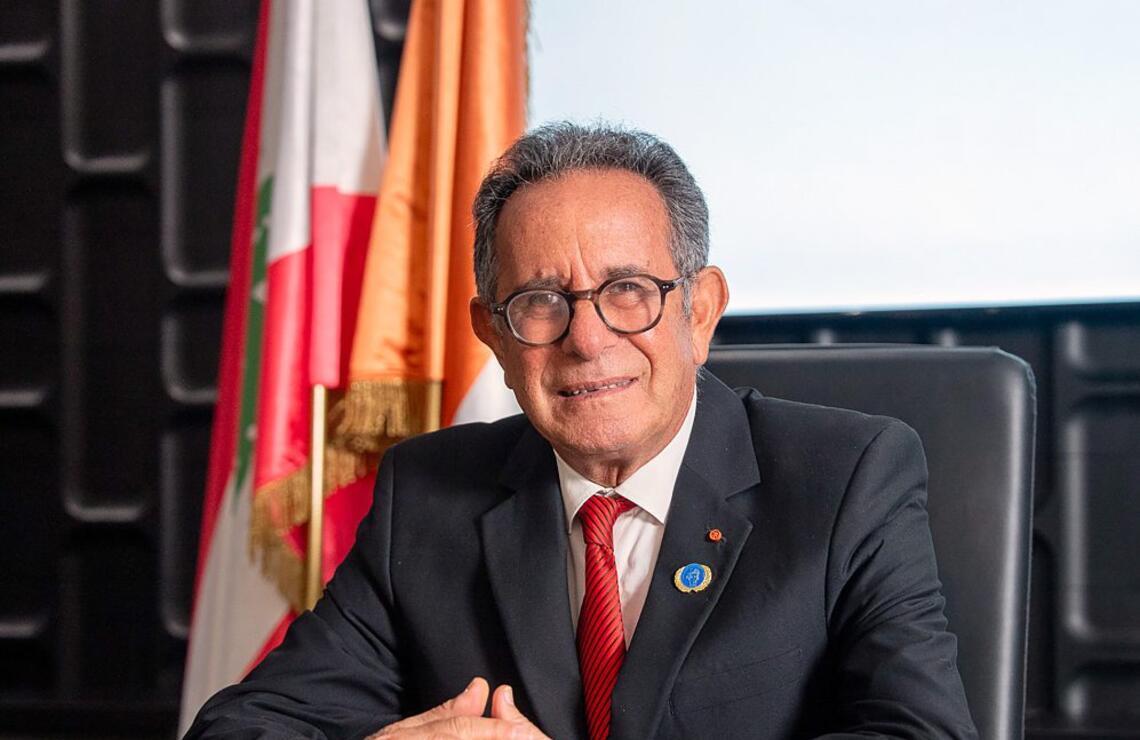
Joseph Khoury: «Prosperity only has meaning if it is shared»
Since the late 19th century, Lebanese people have forged a unique relationship with their adopted country. It is one rooted in deep economic integration, but extends far beyond it. The CCILCI plays a central role in bringing together and energising a dynamic business community.
Despite its active contribution to Côte d’Ivoire’s economic growth, the Lebanese diaspora is often viewed through a lens of generalisations and misunderstandings. Behind the stories of social mobility and multigenerational entrepreneurship, there are also tensions and a growing demand for greater transparency. It was against this backdrop that the Lebanese Chamber of Commerce and Industry in Côte d’Ivoire (CCILCI) was established in 2010, with a dual objective: to structure the economic influence of a community that was already deeply rooted in the country, and to strengthen ties between Abidjan and Beirut. Fifteen years on, the challenge is no longer simply to consolidate, but to reinvent. Dr Joseph Khoury, president of the CCILCI, explains.
AM: What were the initial motivations behind the creation of the chamber in 2010, and how has its mission evolved over time?
Joseph Khoury: At the time, there was no organisation specifically dedicated to defending the economic interests of the Lebanese community and strengthening its commercial ties with Côte d’Ivoire. We had cultural associations, but nothing existed to bring our entrepreneurs and industrialists together. The chamber was created to fill that gap and affirm our role as actors embedded in Côte d’Ivoire’s economic fabric. Today, that vision has evolved towards greater openness and impact. We want to be a strategic partner of the Ivorian state, contribute to education and training, employment, and entrepreneurship among young people and women, and make the chamber a key player in advancing sustainable, inclusive, responsible and solidarity-driven development.
What is your assessment of the economic weight of Lebanese-owned businesses in Côte d’Ivoire?
One thing is certain: our community is present across all sectors of the country’s economy. But beyond figures and percentages, factually, we create jobs and make long-term investments in Côte d’Ivoire. The figures that are often cited date back to the visit of the President of Lebanon in 2013. Yet a great deal has changed in nearly fifteen years, both in the Ivorian economy and within our community. That is why we intend to commission a study shortly to update the available data.
More than a century after the diaspora settled in Côte d’Ivoire, how are entrepreneurs of Lebanese origin contributing to the national economy?
In my view, they are fully integrated into the Ivorian economy. Business leaders — particularly those of the younger generation — were born here, invest here, and contribute every day to creating value and jobs. Their companies occupy important positions across numerous sectors. They play a major role in Côte d’Ivoire’s economic growth and help strengthen its competitiveness in West Africa and beyond.
The CCILCI has established several committees dedicated to young people, women and CSR. What concrete results do you expect from them, and how do these initiatives extend beyond the economic sphere?
What many people do not realise is that many of our companies already have some of the most active foundations in the country. Our objective today is primarily to institutionalise and better structure these initiatives so that we can contribute even more to Ivorian society. These committees reflect our determination to have a lasting impact on Côte d’Ivoire’s wider ecosystem.
We are aligning their work with the priorities of the Ivorian government and its National Development Plan (PND). The Women Entrepreneurs Committee, for example, supports literacy and professional integration. The Young Leaders Committee promotes entrepreneurship, and we hope to launch a start-up incubator soon in collaboration with Saint Joseph University (USJ-CI). Meanwhile, the CRSE-3C Committee, established with the France Côte d’Ivoire Chamber of Commerce and Industry and the Cercle français d’affaires, raises awareness among our members and helps them adopt more responsible practices in line with international standards and regulations.
You emphasise the emergence of a new generation of entrepreneurs. How does this generation differ from the previous one, and what values do you want to pass on to them for the future?
These young people are better educated and more open to the world than their elders, who often started out modestly before building large business groups. I want to pass on two key values to this generation: hard work and integrity — both essential to achieving success while respecting society.
At a time when expectations around governance and transparency are increasing, how does the chamber intend to deepen its collaboration with public institutions and Ivorian civil society?
Since its creation, the chamber has established itself as a recognised partner of the Ivorian authorities. We have signed several agreements with them. We serve as a reliable intermediary between the Lebanese business community and public institutions, while remaining attentive to their priorities.
Today, our role also involves responding to new national expectations in the areas of governance, ethics, CSR and environmental protection. Strengthening this collaboration means greater transparency, better communication about our activities, and the development of joint projects with the state and civil society.
If you had to single out one emblematic achievement of the chamber since its creation, what would it be? And what is the major challenge that continues to drive you today?
I would say our greatest achievement has been helping to structure our business community around a collective vision aligned with the priorities of the Ivorian government. The challenge now is to continue opening the chamber to all committed stakeholders, so that it can become a place where people and interests converge in the service of sustainable and solidarity-driven development — because prosperity only has meaning if it is shared.