
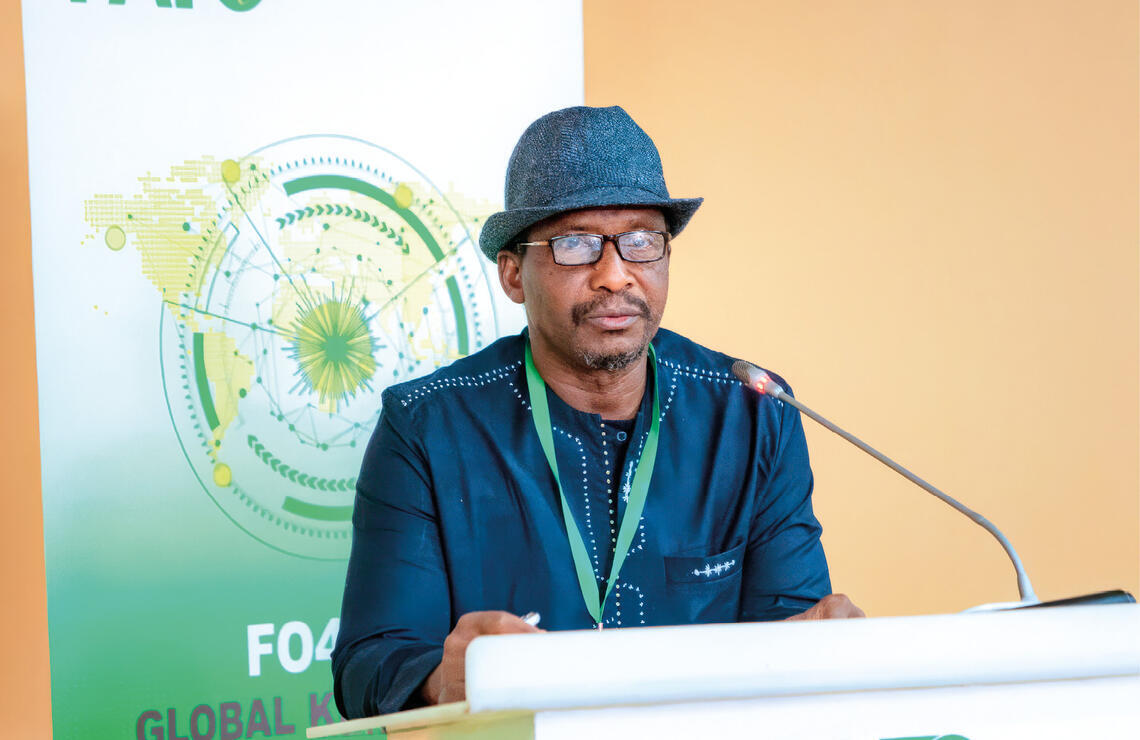
Ibrahima Coulibaly
Mali
Food sovereignty
Since the 1990s, this farmers’ union leader has emerged as one of the leading advocates of African food sovereignty, the only sustainable response to external shocks.
A mixed-crop farmer and livestock breeder as well as a beekeeper, Ibrahima Coulibaly is one of West Africa’s pioneers of the concept of food sovereignty. Founder of the National Coordination of Farmers’ Organisations of Mali (CNOP) and president of the Network of Farmers’ and Agricultural Producers’ Organisations of West Africa (ROPPA), he champions family food farming—the continent’s largest source of employment—against “imported” productivist agriculture and monoculture, which was largely absent from sub-Saharan Africa before the colonial era. His role was recognised by the United Nations, which appointed him an ambassador in 2014 during the International Year of Family Farming. He advocates developing food sovereignty through an agroecological approach, which he sees as the only effective long-term defence against the successive external shocks that have struck the continent—the Covid-19 pandemic, the war in Ukraine, the closure of the Strait of Hormuz…—sending the prices of cereals, fertilisers and energy soaring. Such sovereignty will depend in particular on supporting indigenous crops that are resilient to climate change and enable farming families to continue making a living from their land. The farmers’ leader laments the chronic lack of investment in West African food-crop production and regrets the importation of millions of tonnes of grain. In 2026, which the United Nations has proclaimed the International Year of Rangelands and Pastoralists, Ibrahima Coulibaly is also championing “the complementarity between agriculture and livestock farming”, with a vision of cross-border pastoral mobility that is coordinated and, above all, peaceful. Tensions between farmers and herders remain a source of conflict across the Sahel.