
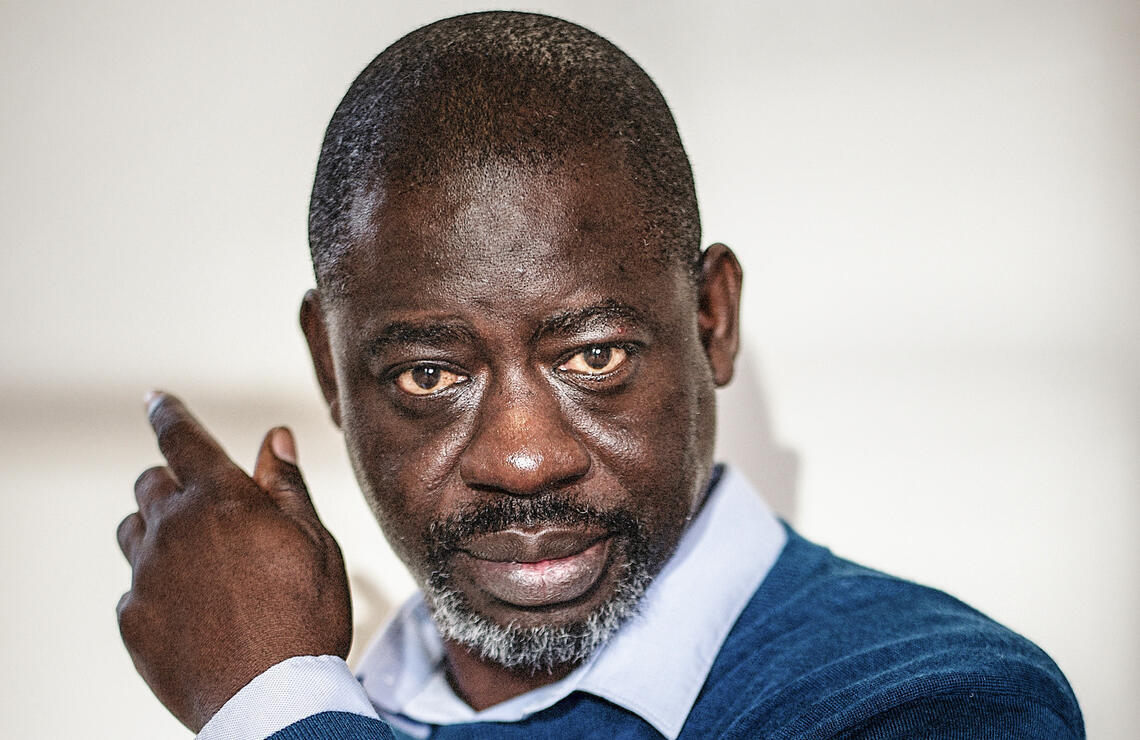
Felwine Sarr: « From one end of Africa to the other, questions remain the same »
Ten years after Afrotopia, Senegalese author and economist Felwine Sarr continues, in La Fabrique du présent, to explore pathways towards African emancipation grounded in dignity, knowledge and the living world.
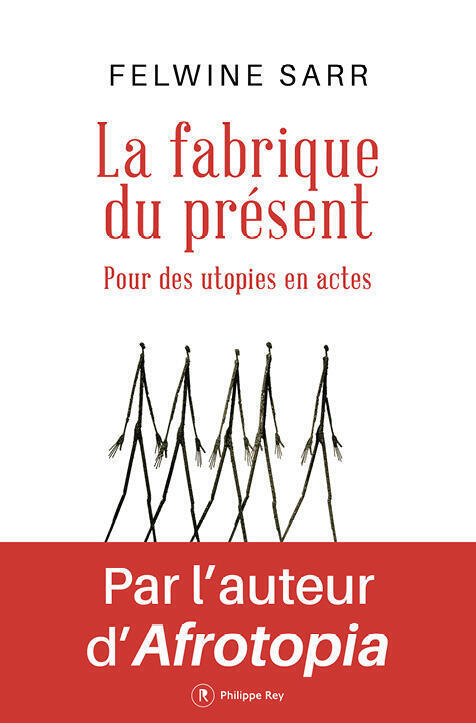
Ten years after the publication of his essay Afrotopia, a powerful manifesto for Africa’s self-determination that garnered widespread attention, the Senegalese novelist, essayist, musician, professor of economics and publisher continues his reflections with La Fabrique du présent. Advocating what he calls an “active utopia,” he lays the foundations for an ambitious project aimed at the collective and individual flourishing of African populations through what he calls “a political economy of dignity.” Seeking greater individual well-being and social harmony, with the common good at the heart of a broader social project, he proposes drawing on the endogenous resources of African societies — knowledge, expertise, political forms, economic systems, spiritual traditions and more — in order to adapt ways of living to local cultures, histories and challenges. A professor of African and Diasporic philosophy at Duke University in North Carolina, Felwine Sarr calls for a reinvention of our collective imaginaries, a renewed relationship with the living world as a whole, and a rejection of the extractivist, consumerist and neoliberal hegemony spreading across the planet and causing immense ecological and human disasters. In his view, Africa has all the potential it needs to pursue a far more virtuous and beneficial path. In contrast to a world that erects borders, the thinker even envisions a cosmopolitics of hospitality that would guarantee every migrant a dignified existence.
AM: In your book, you propose “a political economy of dignity” for African countries, drawing on an idea developed by Guinean thinker Teliwel Diallo. What does it entail?
Felwine Sarr: We must think about and organise the economy first and foremost around the goals we have set for ourselves as a society: ensuring dignity, in all its dimensions, for individual and collective lives, in order to preserve the harmony of the living world. It means creating the conditions for every individual to live a decent life — social protection, income, access to healthcare, education and security, and guarantees of rights and freedoms… The economy is no longer a runaway train that does not know where it is going; it becomes a policy, a conception, an order of knowledge and expertise organised around what we consider fundamental. Dignity, however we define it, is a project around which our economies should revolve. This is the opposite of the notion of development, which is tinged with neocolonialism. Let us remember that before this idea of development, when the coloniser arrived, it considered our extractive potential insufficiently exploited. Our land, resources and latent wealth had to be exploited and transformed into high-value potential. This vision came with the imposition of a single model, an extractivist conception of the economy and a standardised scale of comparison — between those who had supposedly completed their “development” and everyone else.
Why is it relevant to think of Africa as a whole?
I believe strongly in doing so. The continent’s diversity is not the issue. African countries have experienced the same historical cycle over the past several centuries. Engaged in processes of economic, political and social emancipation, they are broadly grappling with the same issues, even though those issues manifest differently within their social, economic and political structures. From one end of Africa to the other, the major questions remain the same: how do we ensure the dignity of our populations, maintain peace and prosperity, free ourselves from relationships of tutelage and dependence, and chart our own path? We can therefore think at this scale; the major dynamics shaping our continent allow us to conceive of Africa as a project still to be built.
How can we ensure that the continent’s wealth benefits its populations rather than being captured through the predatory practices of multinational corporations and certain local elites?
This is one of the major questions. We generally focus on corruption and poor governance — realities that must of course be addressed and tackled. But we forget that the small share of resources that comes back to us is part of a global, worldwide exchange that is profoundly unequal. These two dimensions have to be connected and considered together. It is this deeply unequal relationship that we must succeed in breaking and reversing. Our continent has more resources than anywhere else in the world, yet it is also the one that benefits from them the least. For centuries, it has participated in the making of the world primarily as fuel. Some elites are complicit in this process.
The first task is to imagine how to cultivate elites within our societies who are not compradores. In what environment do we educate them and bring them forward? What social mechanisms need to be put in place to limit these appetites and ensure that these elites serve the well-being of the greatest number? And when they negotiate over our resources, how can we ensure that they do so for the benefit of our populations?
That is the most urgent question. We can blame the rest of the world, but it negotiates with elites who are supposed to represent us and who are not carrying out that responsibility as they should. Yet in countries where this is done more effectively, we see better outcomes in terms of well-being — for example, in Botswana, Mauritius, Morocco and Rwanda, whatever criticisms one may have of Rwanda’s president.
You point out that many African countries saw their constitutional model copied from those of the former colonial powers. Should we imagine other systems of governance?
That question also belongs to the forging of the political sphere: how do we build community, govern, organise rules, share voice, power, well-being and justice? The action itself is much more fundamental than the question of whether a regime is democratic or not. I am fundamentally in favour of democracy, which carries important values that we share. Surveys show us that Africans want democratic systems; they have a very clear understanding of what a genuine democracy is, with all its responsibilities and ideals. However, we can go further by developing forms of political organisation that strengthen democracy and address the limitations we currently see in democratic systems. Several problems are unfolding today; some political regimes are democratic in form but not in substance. We need to move beyond waiting for the graft to take and become proactive in reinventing politics. When circumstances require it, we need to reinvent forms that are appropriate to them. And I certainly do not subscribe to the argument that democracy is not suited to Africans. Let us be creative and imaginative. Let us bring in values that we consider fundamental — living well, sharing, well-being, equity… Let us explore questions of responsibility, participation and the peaceful transfer of power. Let us draw on the best of our constitutional history and that of the wider world, and create syntheses that improve people’s lives. Let us reopen the project! We should not assume that these forms are fixed once and for all. On the contrary, we need to think about them and reinvent them in order to improve them.
Can we, in particular, draw inspiration from precolonial Africa?
Absolutely. Without essentialising it, we should look for what interests us, what can be reclaimed and adapted to the present day. The continent did not wait for its encounter with the West to develop diverse forms of political organisation. This rich repertoire contains answers, and we should draw inspiration from it. I refer to works in political philosophy; for example, Jean-Godefroy Bidima emphasises that palabre — the traditional practice of communal deliberation — is a space for debate in which consensus and pluralism coexist.
In your view, genuine emancipation takes place through knowledge and education…
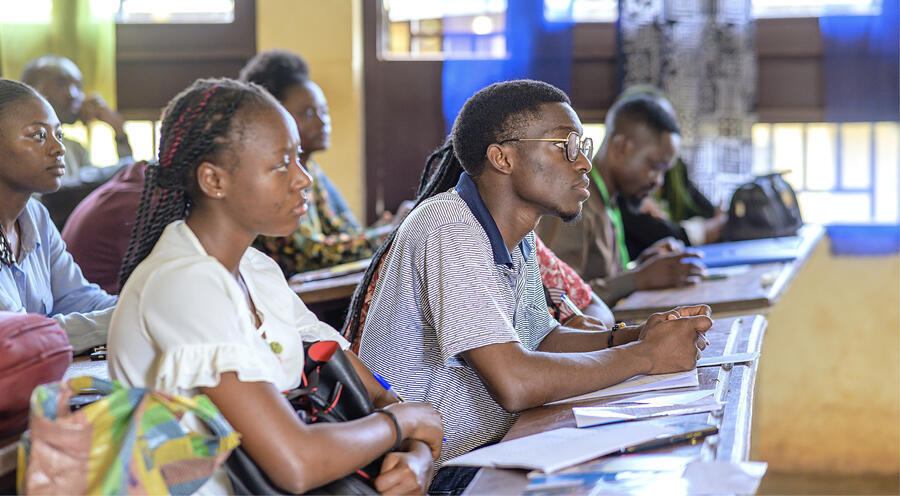
Knowledge is fundamental. It structures a society and reproduces its political, social and cultural forms, as well as its relationship with ecology. It is the implicit foundation of every societal formation. This is where revolutions begin. Knowledge offers us a vision of the world; it reveals dimensions of reality by making them intelligible, while also concealing others. An emancipatory project must therefore consider the kinds of knowledge that produce free individuals, open their eyes to new possibilities and test the possibilities of acting on reality. We cannot confine ourselves to a single archive of knowledge and ignore others simply because they have not been institutionalised or recognised by the authorities that confer legitimacy. Throughout history, African societies have produced knowledge to meet their needs and develop. They should reinstate that knowledge, synthesise it, renew and refine it, identify what has become obsolete and reclaim what remains fruitful and life-giving. This ancestral knowledge has lost its value because other epistemologies have become dominant. This is not about adopting a binary approach — scientific knowledge is a common heritage to which everyone has contributed, but it remains one form of knowledge among others. We should not simply absorb and consume knowledge produced elsewhere. Knowledge lies at the heart of emancipation, at the root of every relationship with the world. The revolution will therefore be epistemic first and foremost. That will take much longer.
Does this mean, for example, rehabilitating ancestral forms of knowledge that some regard negatively as esoteric, and which challenge Cartesian thinking and the laws of classical physics?
Yes. Coming from academia, I obviously respect scientific knowledge. That is my profession; I am not going to cut off the branch I am sitting on. But the possibilities of knowledge extend beyond reason. We should not set them against one another; rather, we should show that certain forms of knowledge combine reason and intuition and invoke other dimensions. If the Cartesian mind considers itself the only legitimate form of knowledge, then it is no longer reasonable. Neuroscience teaches us that thinking, feeling, sensing and reasoning are interdependent processes. Reason operates alongside emotions, feelings and intuition, in resonance with the environment.
What about new technologies?
They are innovations that have not been sufficiently thought through. We have not reflected enough on their societal impacts. We are caught up in a feverish race to “catch up” technologically, without stepping back philosophically to consider what these tools mean for our societies. AI, the latest panacea, reproduces dominant ideologies. Knowledge is not neutral: some forms of knowledge alienate, while others liberate.
What alternative vision of the world do you propose, in opposition to consumer society and productivism?
I suggest the myth of the second Prometheus: he returns, but he is not seeking to steal fire, achieve nuclear fission, extract the Earth’s resources or conquer. Instead, he produces knowledge that repairs, heals and regenerates the living world. In this regard, we have an extraordinarily rich repertoire. I do not want to reduce the continent to therapeutic, psychological or agricultural knowledge, because it has also produced technical and scientific knowledge. But in my view, the forms of knowledge we should prioritise are those that sustain life, preserve it and repair it. Africa is the least industrialised continent. Many advocates of economic development see this as a problem; they want to industrialise it in order to create jobs for young people, process raw materials locally and increase economic growth — which I understand. But we have the ethical advantage of contributing the least to pollution, ecological disaster and greenhouse-gas emissions. We still have room to attempt the experiment of a green, non-entropic economy that meets people’s needs without undermining the living world’s ability to regenerate. We are not completely trapped in the extractivist project of the 21st century. We can do things differently. This does not mean returning to the Stone Age. It means inventing economic forms that reconcile these different requirements. We have the means, the resources, arable land, demographics and epistemic wealth. Let us pursue innovative paths. Without reifying or absolutising them, there are highly interesting economic practices on the continent from which we can learn — the informal economy, for example, which is undervalued and negatively compared with the formal economy.
How is this recognition of the living world as a whole manifested in Africa?
Many traditional African communities — probably less so today in major urban centres — negotiate, engage and interact with the living world through a relational ontology in which relationships are far more transversal and fluid. The separation between nature and culture is less pronounced — categories whose binary nature fails to capture the entanglements and interconnections of the living world. These cosmologies exist, they are powerful, and they imply ecological practices and a different relationship with other communities. For example, when harvesting grain fields, some communities leave part of the harvest behind so that animals and birds can feed. According to Senegalese sociologist and anthropologist Youssouph Mbargane Guissé, artisans, farmers and healers were the true creators of civilisations in Africa. They enabled life to survive, grow and flourish, meet people’s needs, heal diseases and feed populations — long before the modern state and public policy.
How is the continent’s youth an opportunity?
They need to be educated, cared for and equipped with human capital. In economics, demographics are the first resource from which others can be developed. Some people consider the continent’s demographics a problem; that is a misreading. They are a tremendous asset, provided young people are given the tools, knowledge and well-being they need to become a force for transformation. They will be one regardless. Young people are already a force moving things in the right direction. They are conscious and assertive, even though they face undeniable difficulties.
Is the priority to work towards dismantling patriarchy so that women no longer suffer injustice and violence?
Indeed. There is important work to be done among men, who benefit from patriarchy, sometimes unconsciously. Women represent half the population of a nation or a continent, yet they continue to face fundamental structural barriers. This is unacceptable. If we want to work towards the well-being of the community, a major effort is required to remove all these mental, philosophical, economic, political, legal and structural barriers. If I look at this purely from an economic perspective, this inequality is suboptimal. But above all, this is a question of human dignity and an ethics of the individual. Without claiming to speak for women who have been doing serious work on these issues for many years, it was essential for me to address this reality. In Senegal, some of the barriers are rooted in law: women are fighting, for example, to reform the Family Code. But the greatest barriers remain embedded in people’s imaginations and interpersonal relationships.
In your view, the idea that the continent is “behind” others needs to be challenged…
Societies are placed on a standardised scale: these are the ones that are ahead, these are the ones that are behind. But when did this race begin? And did all countries start from the same starting line? Of course, we can draw inspiration from the best in other societies. But societies are shaped by different histories, movements and trajectories of development. They are trying to address their own challenges. What can we do to help them fulfil their most promising potential? Where are they in the timeline of their own history — at a point when they need to heal, or to gather themselves and begin again? Others may be experiencing growth, decline, and so on. At each stage, the task is to realise their brightest potential. There is no linear model leading towards a single, unsurpassable methodology. Societies develop their own responses to their needs: that is the richness of world history.
You believe that certain economic indicators, such as GDP, also need to be questioned. GDP does not take into account the negative impacts of growth on the living world or on health…
In economics, we need to think about what indicators tell us and what they leave unsaid. To demonstrate that he has done a good job, a politician presents growth figures. There is an unconscious homology between growth and well-being. Yet growth simply tells you that you have increased the amount of value added from one year to the next. It says nothing about how that increase was distributed or about the costs associated with it. What do we do with prosperity? How does it serve as a tool for improving people’s lives? And how can we measure that improvement? These lives exist within an ecology of the living world, with which we are interdependent and which affects our existence. We can choose indicators that are far more symbiotic, plural and holistic, encompassing the dimensions of the living world, so that the light we cast on reality is more nuanced and more just.
Why is development aid ineffective?
Research has examined the effectiveness of aid. On its own, it has never lifted countries out of their difficulties. In emergency situations, it can have beneficial effects. But in the long term, it prevents local capacities from being developed to respond to challenges and address essential questions by outsourcing those responses. Within a political economy of dignity, we cannot depend on external aid for fundamental and strategic issues such as education and healthcare. When the US Agency for International Development (USAID) cut its funding for humanitarian programmes [in 2025, editor’s note], everything collapsed overnight. Some countries were significantly dependent on it. The real work of emancipation is to develop the capacity to respond to these needs ourselves and to avoid dependence, even if that takes time.
What is the cosmopolitics of hospitality that you advocate for?
It is a horizon we must think about, even if today’s world is very far from it. Our task is precisely to imagine the possibilities of a more open common life, with better-quality relationships — moving from individual hospitality to public hospitality, at a time when some are erecting borders. This should be enshrined in law: the possibility for an individual to be welcomed wherever they are, simply because they belong to the human community. We could envisage a system that guarantees rights to healthcare, hospitality, protection from violence and the possibility of flourishing. In this way, those we call migrants would be recognised fully in their humanity everywhere in the world, rather than only within their nation-state. How can we turn these ideas into enforceable rights, and make them effective? They already exist in the International Charter of Human Rights. But they are not implemented, and we must consider the obstacles they face in the current state of the world. Because law is not always enough. The difficulty lies in our ideas of belonging: who belongs to which group? Who has the right to be in a particular space? How do we work on these imaginaries? How do we build community? A given community should be able to welcome anyone, regardless of their skin colour, religion or anything else, and fully recognise them.
Is this connected to the South African humanist concept of Ubuntu, which refers to fraternity, compassion and the idea of “building community”?
Yes, and it also resonates with Maya in Mali, the harmony of the community, and Teranga in Senegal, the notion of reciprocity. African societies have produced many concepts for thinking about communal life and making it as harmonious as possible. Of course, there are tensions and crises, but these societies have shown great imagination in the social engineering required to weave and reweave community, open up relationships and reconnect them. Here again, we have a fascinating repertoire of resources to draw upon as a philosophical and ethical source.